

Dear Fellow Parishioners,
The Lord has given each one of us natural talents and abilities and He calls us to be good stewards of all He has given to us. Through Jesus’ time on Earth, He showed us the need for generosity in all that we do. As Jesus shared of Himself to all He encountered, so should we. In our family this concept of giving back and building community is an expectation. Growing up we were both raised in Catholic households that valued giving time, talent, and treasure. Continuing to build a Culture of Generosity is vital for the well-being and longevity of our parish community. We are working every day to try and answer the Lord’s call to be generous.
When we were asked to help co-chair the Dinner and Auction, it seemed like an easy yes. We are thrilled to be able to share our talents with our community in this new way. It is amazing to see how many people are already involved in the makings of this event and we are excited to be a part of it. We invite you to be a witness to the power of generosity by keeping tabs on the Dinner and Auction happenings as well as discerning how you can answer the Lord’s call to be generous. It is truly astonishing to witness the generosity of our community. In Christ,
Mike and Missy Adam
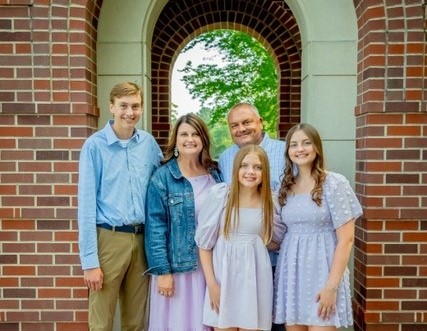
Meet Mike & Missy: Mike and Missy Adam and their family have been parishioners for twenty-three years. They are currently in their first year of serving as Event Chairs for the Dinner and Auction. Missy is a member of the School Advisory Board, a former Home and School President, an EMHC and a part of the Family of Parishes Planning Team.

Dear Fellow Parishioners,
We are all called to help foster a Culture of Generosity within our Parish family not only by the Archbishop, but by the Lord. It is humbling to see how many people invest their gifts and talents to both our church and school. This community is built on the generosity of our parishioners, and it is overwhelming to see the will of Jesus lived out at St. Stephen the Martyr.
We want to do our part in helping to build a Culture of Generosity here. We know that in order to see continued growth and involvement in our church, we must answer the call to live generously and give our gifts and talents. The Dinner and Auction particularly has been such a blessing for us because not only are we able to contribute to a successful event, but we are able to invite so many people to come with us on the journey. Last year we had over 80 people help us with the event that really were an answered prayer. It was amazing to see new people say “yes” to His call! There were so many others who contributed in other ways. We are excited to help chair the event for another year, and we hope that you have an opportunity to witness all that this community has to offer.
In Christ,
Chris and Lizzy Osterloh
Meet Chris & Lizzy: Chris and Lizzy Osterloh and their family have been parishioners for seven years. They are currently in their second year of serving as Event Chairs for the Dinner and Auction. Lizzy is involved in the Home and School Association and Chris is currently serving on our Pastoral Council.


Advent Blessings SSM Parish Family:
My name is Amy Powers. My husband, Ben, and I have been members of the parish for just over three years. We have two children, Parker (2nd grade at SSM) and Grace (4 yrs old).
As a member of Pastoral Council and parish/school volunteer, I wanted to take a few moments to share my support and excitement of the Big Goal and Clear Path journey here at St. Stephen the Martyr.
Shortly after joining the parish, Archbishop Lucas rolled out the “Big Goal” across the diocese. Initially that effort sounded like “just another campaign”. However, over time I started hearing phrases that made me eager to learn more; missionary disciples, conversion moments, deepening our faith community, and aligning our school and parish families. These phrases are the foundational elements of the Clear Path.
As the parish leadership teams have already started planting the seeds and laying the foundation, I wanted to share my personal journey. I feel we are already starting to see the early fruits of this labor.
Personally, I visualize the Clear Path as pillars of our faith journey.
Welcome: Over the course of my families three years with the parish our “welcome” has been through various avenues. Initially we had just moved to the area and enrolled our son in the school Transitional Kindergarten (TK) program. Through our school involvement we then joined CYSL micro soccer and met several parish families. The joy of seeing a familiar face at mass and the personal invitation to enjoy donuts and coffee set the foundation. Along the journey there were many parishioners greeting with a smile and a simple greeting to make us feel like family.
Conversion: As my family got settled and started to get the lay of the land through school and parish functions, I had a desire for more. My husband and I both had the opportunity to attend the parish retreat that was offered in October 2021. The weekend not only opened the door to a deeper relationship with God, but also introduced me to a broader circle of sisters who were on fire with their faith. Little did I know this conversion moment would lead me to weekly adoration, joining Seven Sisters, and many other opportunities.
Growth: As you all have probably felt, the growth pillar ebbs and flows. With each opportunity I find myself starting to wrestle with questions of how this idea might fit into the purpose of the Clear Path:
“Why is God calling me to this opportunity?”
“Am I serving in the way I’ve been called on this missional discipleship journey?”
“Does this align with the pillars of the Clear Path?”
“Will this outcome serve SSM by strengthening the welcome or conversion experience for another parishioner?”
As I reflect on these questions, I continue to pray for guidance and discernment for myself, the parish, and all leaders.
Discipleship: I look forward to venturing through the growth stage into the missional disciple role. Being a part of the mission and vision of SSM to strengthen this community one parishioner at a time gives me great joy. The strength and wisdom I gain from each interaction is immeasurable.
In closing, I would like to wish you and your loved ones and very blessed Advent. I encourage you to choose one person to pray for this Advent. God already knows what they need, just simply make that intentional effort to keep them in your prayers. As we build our community of prayer, we too will continue to build our welcome on the Clear Path.


Dear Fellow Parishioners,
The Archbishop’s Goal to establish Collaborative Leadership within parishes is key in our journey toward becoming a missional community. A pastor’s first priority is to meet the spiritual needs of his flock. We as lay people have been putting too much pressure and responsibility on our priests in the past few decades. Priests were never meant to lead everything that happens at a parish; their ministry is to support the mission and vocation of the laity.
God has made each one of us individually, and we are each called to participate in his plan of salvation in a unique way. The Lord has given us all natural talents along with supernatural gifts by grace of our baptism and confirmation. We need to continually discern and ask Him how He wants us to use these gifts to bring others closer to Christ.
Being a leader in our community is not just about “getting stuff done”. We are involved in a number of ministries, but it’s not about filling a seat or agreeing to help out of a sense of guilt. It is about forming relationships, walking with people in their faith journey, and deeply investing in specific people within our community. Your call to collaborate with Father Dave, Father Zach, and our parish staff could take on many forms. It could be helping with the food pantry, being on one of the staff committees, leading or consistently attending a small group, signing up for and praying a holy hour each week for those in our parish who are suffering, serving as a lector at Mass, joining the choir, mentoring engaged couples, or just talking to someone who looks alone at donuts after Mass.
In the past few years, a verse from Psalm 116 has come to us over and over: “How can I repay the Lord for all the great good done for me?”. The Lord has blessed us in countless ways in our lives, and truth be told, there is no way for us to ever repay His kindness. The best we can do is listen to the voice of the Holy Spirit when he invites us into the lives of other people to share His great good. We invite you to listen for that voice with us, so that our parish can become a missional community to change the lives of every parishioner and those in our community.
In Christ,
Matt and Katie Keller
Meet the Keller Family
Matt and Katie Keller and their family have been parishioners for six years. As passionate members of our St. Stephen the Martyr community they have been involved in many areas. The Kellers serve as baptism class instructors, small group leaders, marriage formation mentors, and host a monthly Srodo (an evening for young adult fellowship). Katie also serves as a teacher in our Catechesis of the Good Shepherd program, an EMHC and homebound minister, and Archdiocesan coordinator for the Seven Sisters Apostolate. Matt is currently serving on our Pastoral Council.
